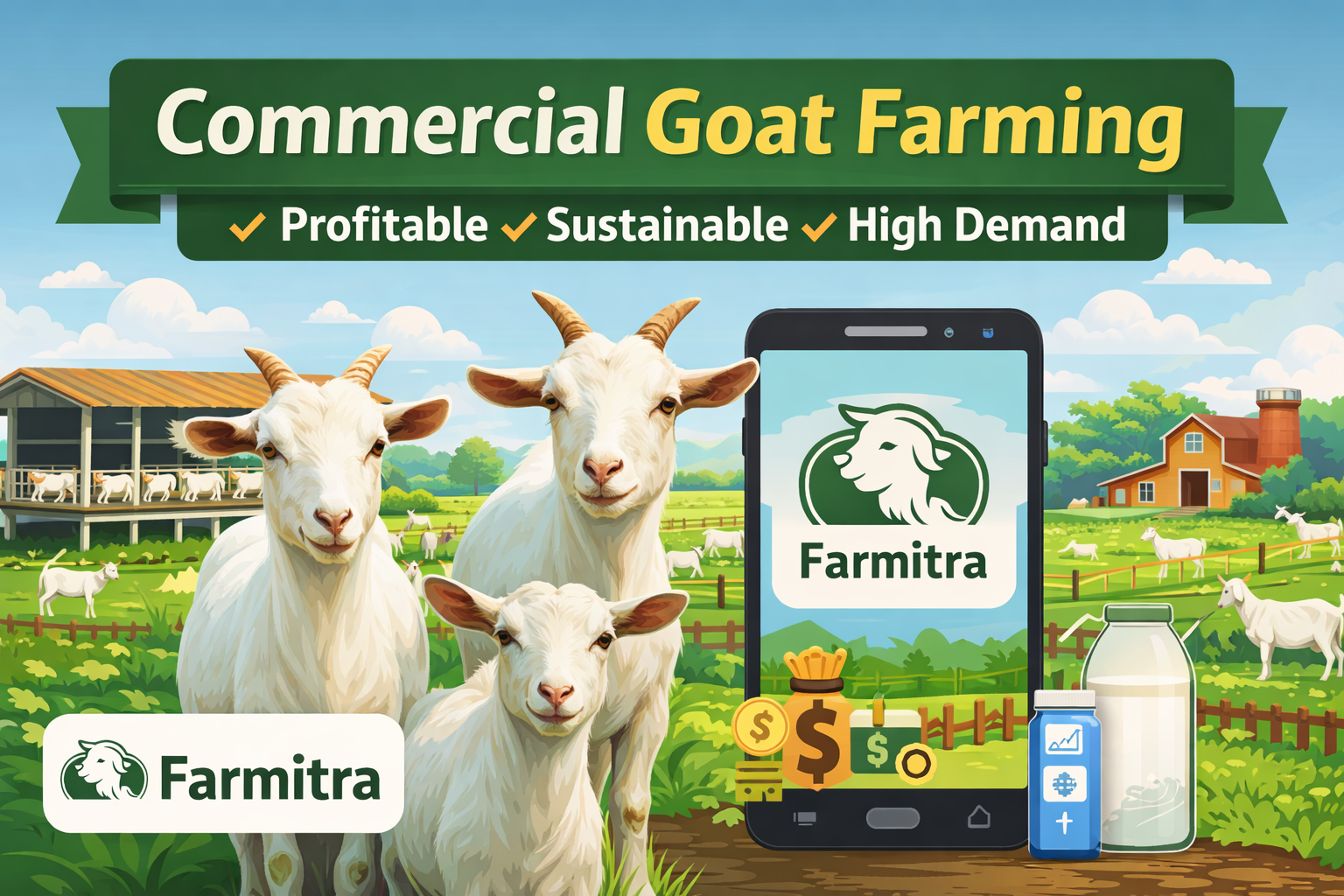
Livestock farming has long been a cornerstone of rural economies across Asia and Africa. Among various livestock enterprises, goat farming has emerged as one of the most profitable and sustainable agricultural activities, especially for small and marginal farmers. Goats are highly adaptable animals that thrive in diverse climatic conditions, require relatively low investment, and offer multiple income streams through meat, milk, manure, and breeding stock. With increasing demand for goat meat (chevon) and goat milk in urban markets, commercial goat farming is rapidly becoming an attractive agribusiness opportunity.
In India alone, the goat population exceeds 148 million, contributing significantly to rural livelihoods and the livestock economy. The rising consumption of goat meat, which is considered a premium and healthier alternative to other meats, has created strong market demand. Furthermore, goats reproduce quickly, allowing farmers to expand their herds faster compared to cattle or buffalo. These factors collectively position goat farming as a viable enterprise capable of generating regular income for farmers.
Understanding the Basics of Goat Farming
Goat farming involves the scientific breeding, feeding, housing, and management of goats to produce meat, milk, fiber, or breeding animals. Successful goat farming requires careful planning of several factors including breed selection, feeding management, housing infrastructure, disease control, and marketing strategies.
One of the most important aspects of goat farming is selecting the appropriate breed according to the production objective. Some goat breeds are primarily raised for meat production, while others are valued for milk production or dual purposes. In India, popular meat breeds include Boer, Black Bengal, and Sirohi, while Jamunapari and Beetal are well known for milk production.
Farmers entering commercial goat farming often adopt either stall-fed intensive systems or semi-intensive systems where goats graze during the day and receive supplementary feed in sheds. Semi-intensive systems are commonly recommended as they reduce feed costs while maintaining good productivity.
Infrastructure and Housing Management
Proper housing is essential for maintaining goat health and productivity. Goats require well-ventilated shelters that protect them from rain, extreme heat, and cold conditions. The housing structure should be elevated from the ground to maintain dryness and prevent infections.
Commercial goat farms typically construct sheds with slatted floors that allow manure to fall below, making cleaning easier and improving hygiene. Adequate space per goat is essential to prevent overcrowding, which can lead to stress and disease outbreaks. A well-designed goat shed should include separate areas for breeding goats, pregnant females, newborn kids, and sick animals.
Infrastructure investment also includes fencing, water supply systems, feed storage areas, and veterinary care facilities. While the initial setup may require capital, a well-managed goat farm can recover these costs quickly due to the high reproductive rate of goats.
Feeding and Nutritional Management
Nutrition plays a crucial role in goat farming profitability. Goats require a balanced diet consisting of green fodder, dry fodder, grains, and mineral supplements. In traditional systems, goats graze on natural vegetation including grasses, shrubs, and crop residues.
However, commercial goat farming increasingly relies on scientific feeding strategies to improve growth rates and milk production. Farmers cultivate fodder crops such as Napier grass, lucerne, and berseem to ensure a consistent feed supply throughout the year.
Supplementary feeding with protein-rich concentrates enhances weight gain in meat breeds and improves milk yield in dairy goats. Clean drinking water and mineral mixtures are essential for maintaining goat health and reproductive efficiency.
Breeding and Reproduction Management
One of the major advantages of goat farming is the high reproductive capacity of goats. Female goats typically give birth to one or two kids every eight to nine months, allowing rapid herd expansion. Proper breeding management ensures healthy offspring and improved genetic quality.
Farmers often maintain breeding bucks with superior genetic traits to improve the productivity of the herd. Artificial insemination and scientific breeding programs are increasingly being adopted to enhance meat yield and disease resistance.
Regular monitoring of pregnancy, proper care during kidding, and vaccination of newborn kids are essential management practices that improve survival rates and overall farm productivity.
Read Articles: Reengineering Post-Harvest Procurement: How Farmitra AI Enables Market-Led Farmer Income Growth
Disease Control and Veterinary Care
Disease management is a critical component of commercial goat farming. Common goat diseases include PPR (Peste des Petits Ruminants), foot-and-mouth disease, enterotoxemia, and parasitic infections. Preventive vaccination schedules and regular health monitoring are necessary to reduce mortality and economic losses.
Farmers must maintain hygienic conditions in goat sheds and provide timely veterinary treatment when required. Deworming programs and nutritional supplementation significantly improve immunity and growth performance.
Modern goat farming enterprises increasingly integrate digital livestock monitoring systems that track animal health, feeding patterns, and productivity, enabling early detection of diseases.
Market Demand and Profitability
The global demand for goat meat continues to rise due to increasing population, urbanization, and changing dietary preferences. Goat meat is considered leaner and healthier than many other red meats, making it popular among health-conscious consumers.
Commercial goat farming offers multiple revenue streams including:
- Meat production (chevon)
- Goat milk and milk products
- Breeding stock sales
- Organic manure
- Goat fiber (in specific breeds)
Farmers can generate consistent income by adopting a structured marketing strategy that includes local markets, restaurants, meat processing units, and livestock traders. Goat farming also provides opportunities for value addition through processed meat products and dairy products.
The Role of Digital Agriculture Platforms like Farmitra
As agriculture and livestock farming move towards digital transformation, platforms like Farmitra play a critical role in empowering farmers with data-driven decision support. Goat farmers often face challenges related to disease diagnosis, feed management, veterinary advice, and market price information. Farmitra addresses these challenges through an integrated agritech ecosystem.
Farmitra’s AI-powered advisory tools can assist goat farmers by providing real-time guidance on livestock health management, feed planning, and disease prevention. Through image-based diagnosis and expert consultation, farmers can identify animal health issues early and take corrective measures before they escalate into major losses.
The platform also enables farmers to connect with veterinary experts, livestock suppliers, and input providers through a digital marketplace. By integrating market intelligence and livestock advisory services, Farmitra helps farmers make informed decisions that improve productivity and profitability.
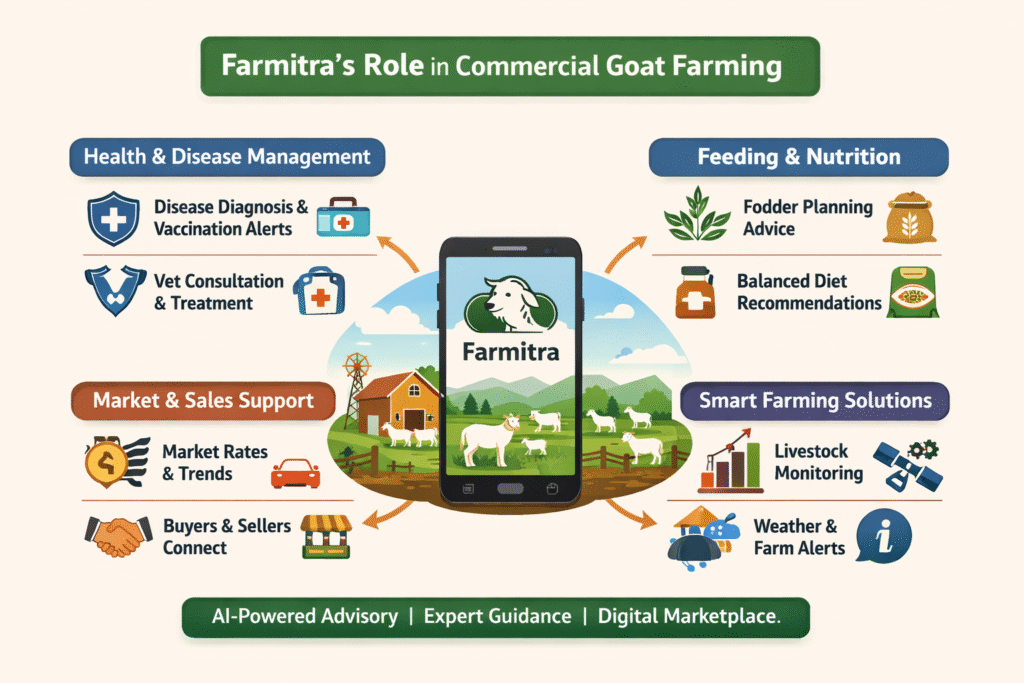
Furthermore, Farmitra’s digital tools support farmers in planning fodder crops, accessing livestock financing options, and exploring nearby markets where they can sell goats at better prices. This digital ecosystem bridges the gap between traditional livestock practices and modern agricultural technologies.
Read Articles: Artificial Intelligence in Agriculture: India’s Strategic Leap Toward Data-Driven Farming
Future Outlook of Goat Farming
The future of goat farming is closely linked with technological innovation, improved breeding programs, and organized market systems. Governments and agricultural institutions are increasingly promoting goat farming as a tool for rural development and poverty reduction.
With the integration of artificial intelligence, IoT-based livestock monitoring, and digital advisory platforms like Farmitra, goat farming is evolving into a modern agribusiness sector capable of generating sustainable income for millions of farmers.
In the coming years, commercial goat farming is expected to expand further as demand for high-quality meat and dairy products grows in both domestic and international markets. Farmers who adopt scientific management practices and leverage digital technologies will be better positioned to benefit from this rapidly growing livestock industry.
Download Farmitra APP
